What is Ozone?

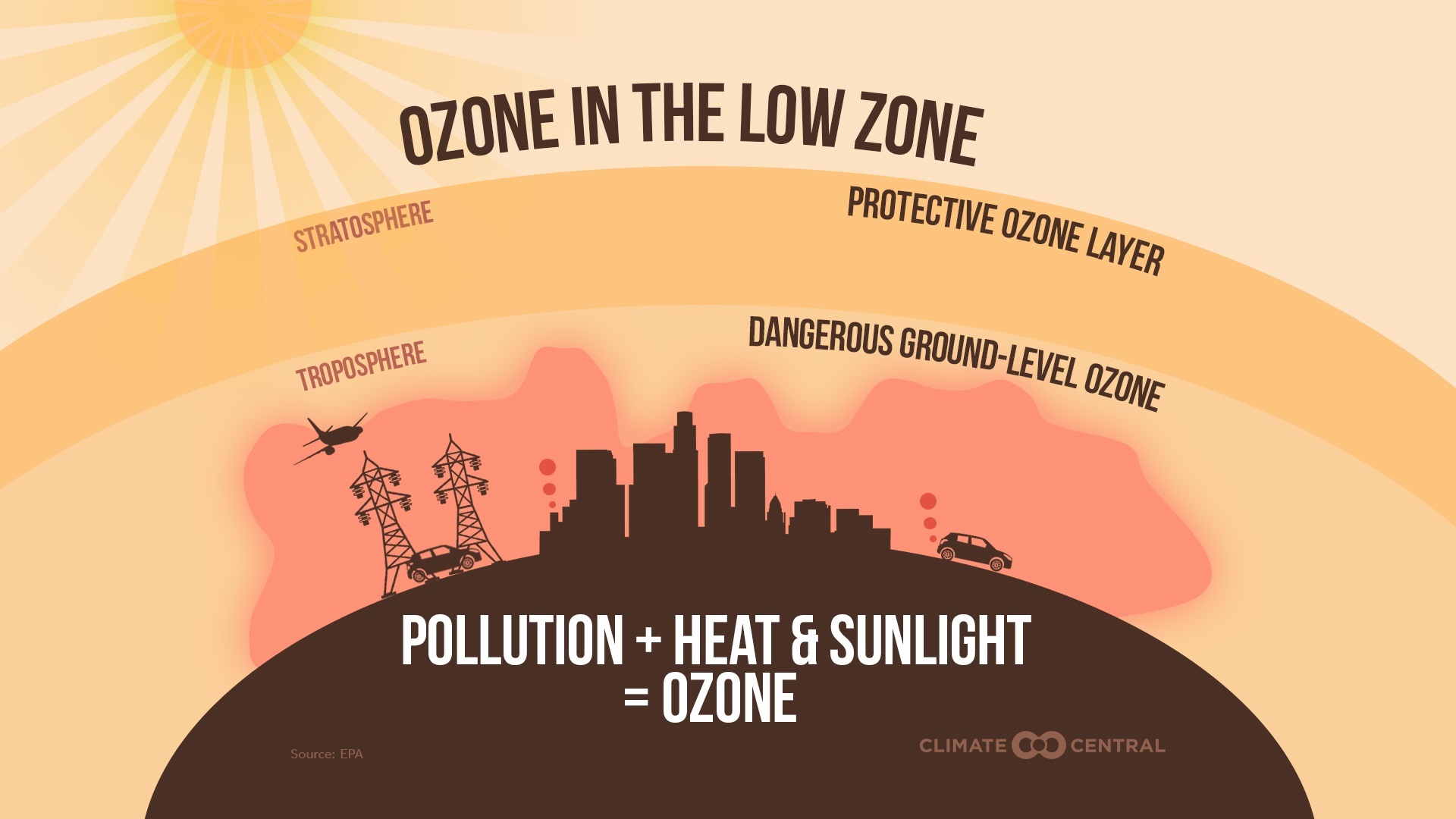
Ozone is a gas composed of three atoms of oxygen. Ozone occurs both in the Earth's upper atmosphere and at ground level. Ozone can be good or bad, depending on where it is found. Called stratospheric ozone, "good ozone" occurs naturally in the upper atmosphere, where it forms a protective layer that shields us from the sun's harmful ultraviolet rays. Tropospheric ozone, also known as "ground-level" or “bad” ozone, is a harmful air contaminant, respiratory irritant, and the main ingredient in "smog".
How does ground-level ozone form?
Ground level ozone is not emitted directly into the air, but is created by chemical reactions between oxides of nitrogen (NOx) and volatile organic compounds (VOC). These pollutants emitted by cars, power plants, industrial boilers, refineries, chemical plants, and other natural and human-made sources chemically react in the presence of sunlight to make ozone.
Ozone is most likely to reach unhealthy levels on hot sunny days in urban environments, but can still reach high levels during colder months. Ozone can also be transported long distances by wind, so even rural areas can experience high ozone levels.
What is background ozone?
The U.S. EPA defines background ozone to be ozone from sources or processes other than U.S. human-made emissions. Background ozone is meant to focus on “non-controllable” sources, including stratosphere-troposphere transport, long-range transport from non-domestic sources, lightning, or photochemical production from natural NOx and VOC precursor emissions including wildfires. Noncontrollable ozone events, impact the western states more than other parts of the U.S., due to large wildfires, frequent stratospheric intrusions, and efficient intercontinental transport from Asia.
On average, in Colorado 61% of ozone is out of our control. Regulations and policies can only affect about 28% of ozone.
At what level is ozone unhealthy?
The United States Environmental Protection Agency (USEPA) set air quality standards based on the latest health studies. The standards are set to protect the public against adverse health effects. In 2015, the USEPA lowered the standard from 75 to 70 parts per billion (ppb).
Exposure to high concentrations of ozone can include the following health effects:
- Eye irritation.
- Difficulty in breathing / shortness of breath.
- Aggravated / prolonged coughing and chest pain.
- Increased aggravation of asthma.
Ozone also impacts vegetation by reducing agricultural crop and forest yield, causing leaf injury, diminishing resistance to pests and disease and reducing tree seedling survival.
To see the ozone values at the state monitor sites you can visit the CDPHE Colorado Air Quality site.